How to Prepare Financial Evidence Without an Attorney
Courts apply the same evidence standards whether counsel sits beside you or not. Meeting those standards alone is work, but it is learnable work, and this is the whole method.

Around three quarters of family law litigants handle some or all of their case without a lawyer, mostly because representation costs more than they have. The judge will not lower the evidence bar for you. The realistic goal is different: do the document work so well that the bar stops being the problem.
Financial evidence is the part of a divorce a self-represented person can genuinely master, because it runs on discipline rather than courtroom instinct. Records either exist or they do not. Totals either check out or they do not. This guide walks the full preparation sequence: gathering, organizing, analyzing, and packaging, plus the two or three moments where buying an hour of professional help returns the most.
Step one: gather the record
Start from the standard document set: statements for every account over three to five years, complete tax returns, pay records, P2P exports, debts, and any business records. The full list with sources lives in our divorce document checklist. Copy what you lawfully hold before cooperation gets scarce, pull your own IRS transcripts and credit report, and use formal discovery for the rest. Discovery tools work the same for pro se parties, and our discovery guide covers each one.
Step two: organize to court standards
Organization is where self-represented cases usually win or lose credibility. The rules fit in one paragraph: preserve originals untouched, work on copies, structure folders by account and time, index every document with its source and date obtained, and never mix your work product with the source records. The full architecture, including provenance and hashing, is in our guide to organizing financial evidence for divorce court.
Step three: turn documents into findings
A pile of statements proves nothing until someone reads it. Three analyses cover most cases, and each has a full guide on this site.
- Statement analysis. Categorize transactions, isolate transfers, and flag what changed around separation. Method in our bank statement analysis guide.
- Income testing. Compare sworn income against deposits, net of transfers. Method in declared vs observed income.
- The inventory. Every asset and debt in one table with values and sources, the foundation for any settlement math. Method in building a marital asset inventory.
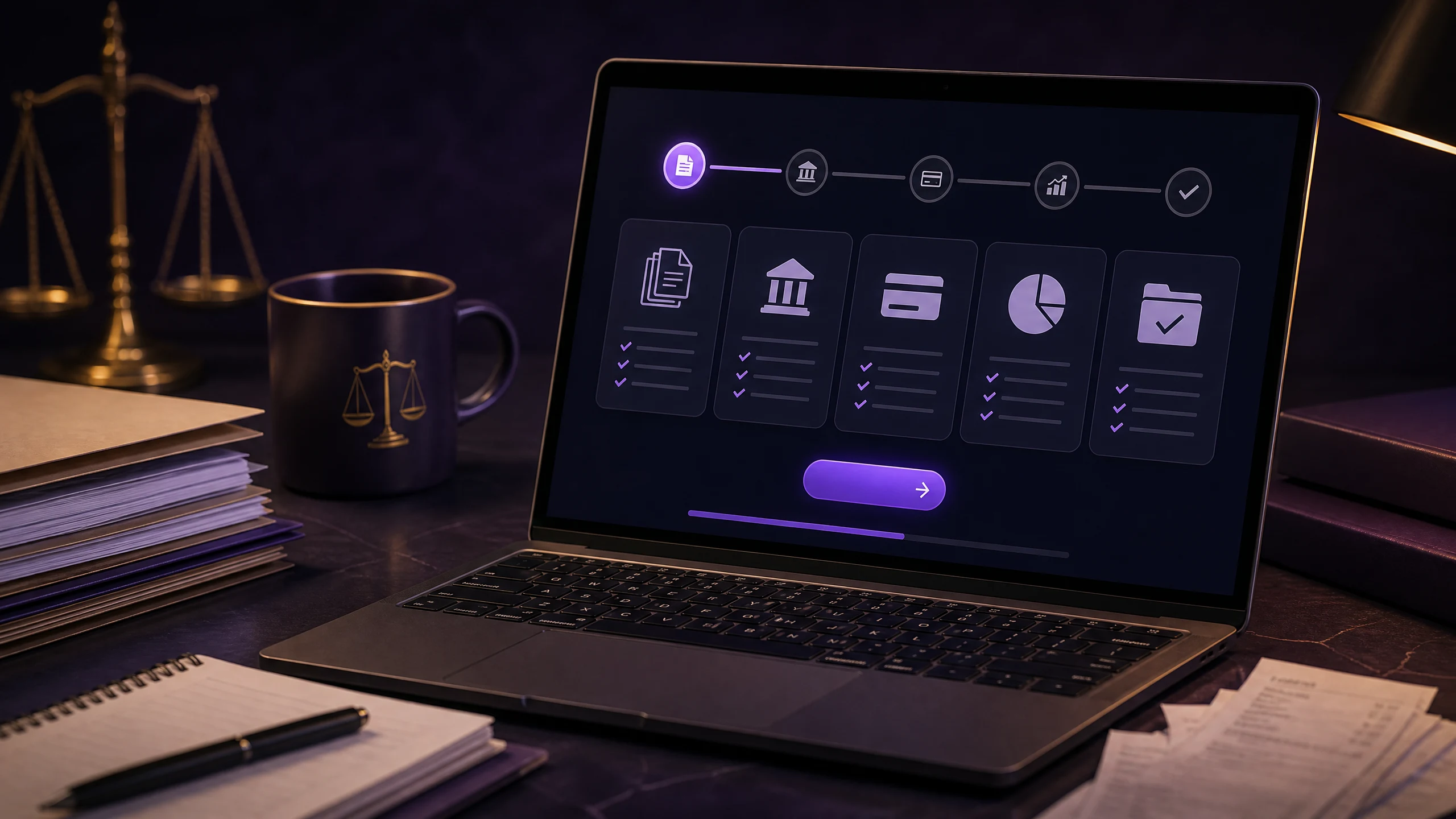
The novice path, built inThrive Financial was designed for exactly this situation. The guided journey walks document upload, inventory building, and analysis step by step: the Document Parser reads statements, returns, affidavits, and P2P exports into structured data, and the Asset Manager builds the asset, debt, income, and children inventory the settlement math runs on. Findings present as "Questions for Counsel" in neutral language, and every figure links back to its source page. Start free, three AI parses included, no credit card.
Step four: package for the court
- The financial affidavit. Complete it from your organized record, not memory, and keep a source note for every line. Your own affidavit gets tested the same way you test theirs.
- Summary exhibits. Courts accept summaries of voluminous records. One-page tables, timelines, and comparisons, each row citing its statement page, present better than any stack of PDFs.
- Copies and numbering. Three copies of everything: court, opposing party, yours. Number pages so testimony can cite exactly.
- Local procedure. Exhibit rules vary by county. Your court's self-help center, indexed at the National Center for State Courts, lists formatting and filing specifics.
Where to spend limited money
Full representation is not the only purchasable unit. Most states allow limited-scope, or unbundled, representation: an attorney handles defined tasks while you run the rest. The two highest-return purchases are settlement agreement review before signing, covered in our agreement evaluation guide, and an hour of hearing preparation. Free and sliding-scale options exist too: Legal Services Corporation indexes legal aid by state, and ABA Free Legal Answers takes written questions at no cost. Spend money where judgment is required; spend discipline everywhere else.
Do the expert-grade prep yourself
Thrive Financial gives self-represented spouses the same document parsing, inventory building, and analysis workflow professionals use, with a guided novice mode and findings framed as questions for counsel. Data stays on your device. Start free, no credit card required.
Start your free caseFrequently asked questions
Can I handle divorce financial evidence without a lawyer?
Yes, and most litigants handle at least part alone. Courts apply the same evidence rules either way, so the work is meeting the standards: complete records, clean organization, lawful sources, cited exhibits.
What financial evidence matters most?
Statements, tax returns, pay records, P2P histories, and business records, organized by account and time. They test the affidavits and drive support and division.
What is unbundled legal help?
Limited-scope representation: paying counsel for defined tasks like agreement review or hearing prep while you run the document work.
Will a judge take my analysis seriously?
Judges weigh evidence quality, not credentials. Dated tables citing source pages carry weight from any presenter.
Further reading and helpful resources
These independent resources go deeper on the topics above. None of them is affiliated with Thrive Financial.
- National Center for State Courts. Self-help center directory for every state's forms and procedures.
- Legal Services Corporation. Free and low-cost legal aid by state.
- ABA Free Legal Answers. Pro bono written answers to civil legal questions.
- IRS: Get Your Tax Record. Transcripts for the income record.
- AnnualCreditReport.com. Free credit reports for the debt inventory.
Thrive Financial is a financial-analysis and case-organization tool, not a law firm, accounting firm, or substitute for licensed professional review. Court procedures, evidence rules, and limited-scope representation availability vary by jurisdiction; confirm specifics with your court's self-help center or a licensed attorney.
Continue Your Investigation
Build each stage of the pipeline with these guides.